To Be At War
Documenting parenthood in the military
Arin Yoon
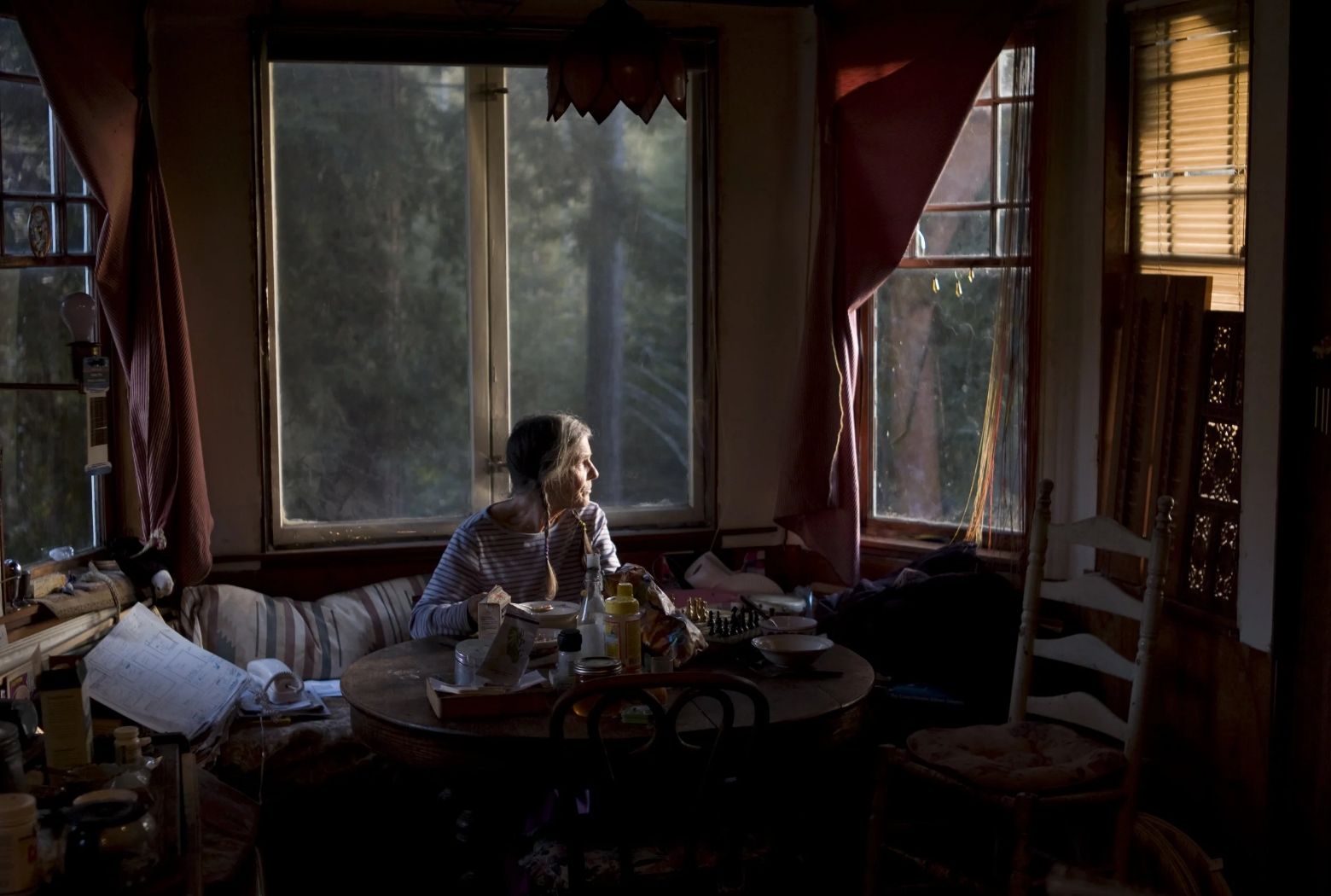
I was born and raised on a small rural commune in Northern California with 10 families sharing resources in order to coexist on 32 acres of redwoods. The commune was born out of the idealism of the counterculture movement. The early members were veterans of the Korean and Vietnam wars, environmental protesters, and 1960s middle-class kids escaping the military-industrial complex.
My parents were seeking to create a world of their own making, building with recycled materials, basic tools, and their own ingenuity.
My photographs document the changing nature of life in this commune.
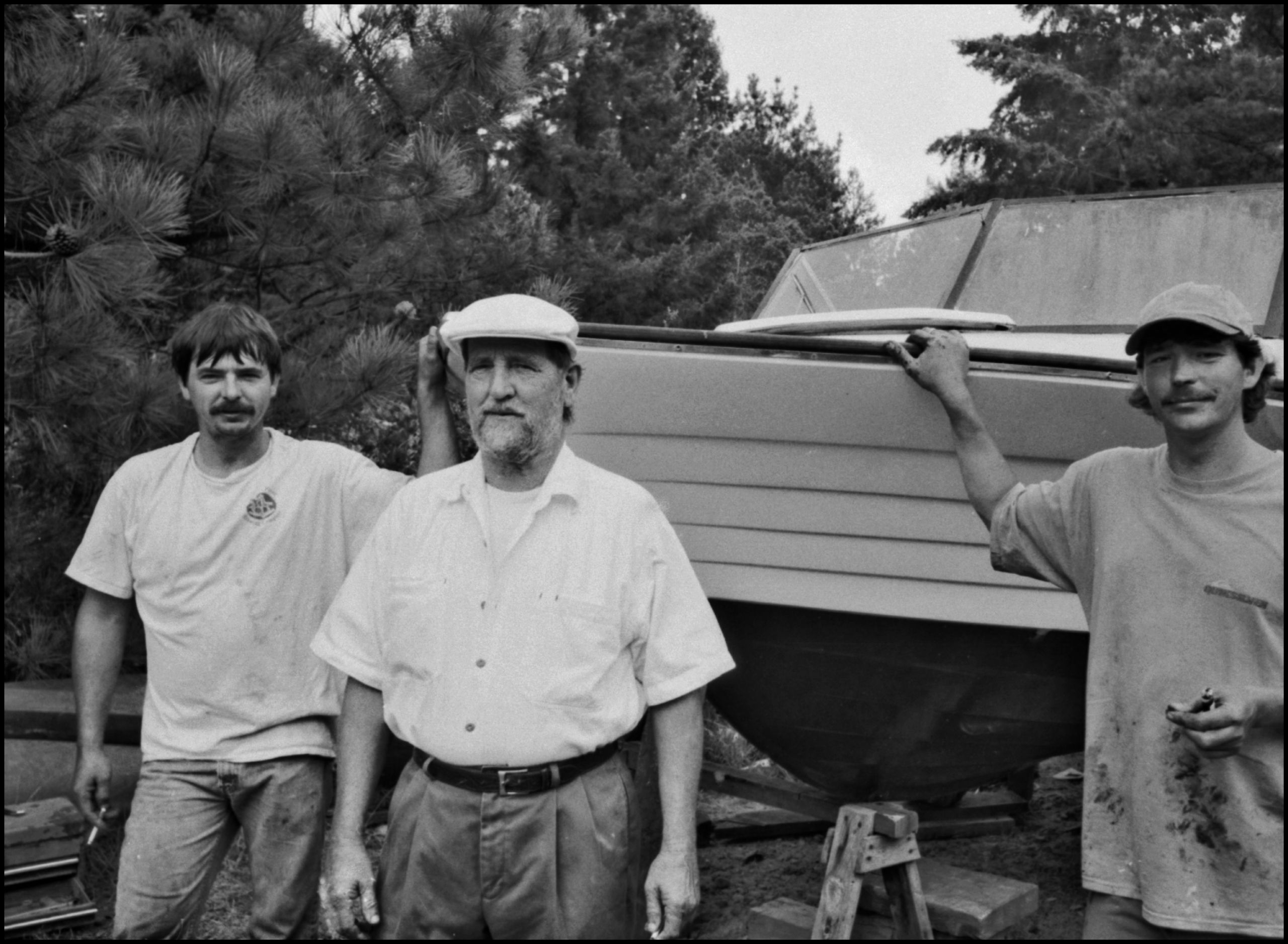
Gabriel Berent, Father & Sons, 1998
Billy, Willy, and Wesley Walsh in front of their boat prior to a fishing trip. Willy and his brother spend each fishing season out in the Pacific Ocean in search of salmon, halibut, and rockfish. Willy’s son caught the largest canary rockfish in California history in 2025. The beautiful part of the commune is that they share their catch generously with all of the other members. Commercial fishing is one of the main ways that commune members provide for their families and other members.
The first 10 years of my life were spent in a school bus that my dad had converted into a home. This was followed by an eclectic house we constructed when the building department forced my parents to leave the school bus. This early experience of communal living, economic survival, and developing the land informed my concept of the power of community.
I didn’t know I was perceived to be poor until a teacher in high school told me that having broken-down cars in the front yard was seen as a sign of poverty. Most of my friends on the commune had grown up in buses or trailers, so this experience felt normal.
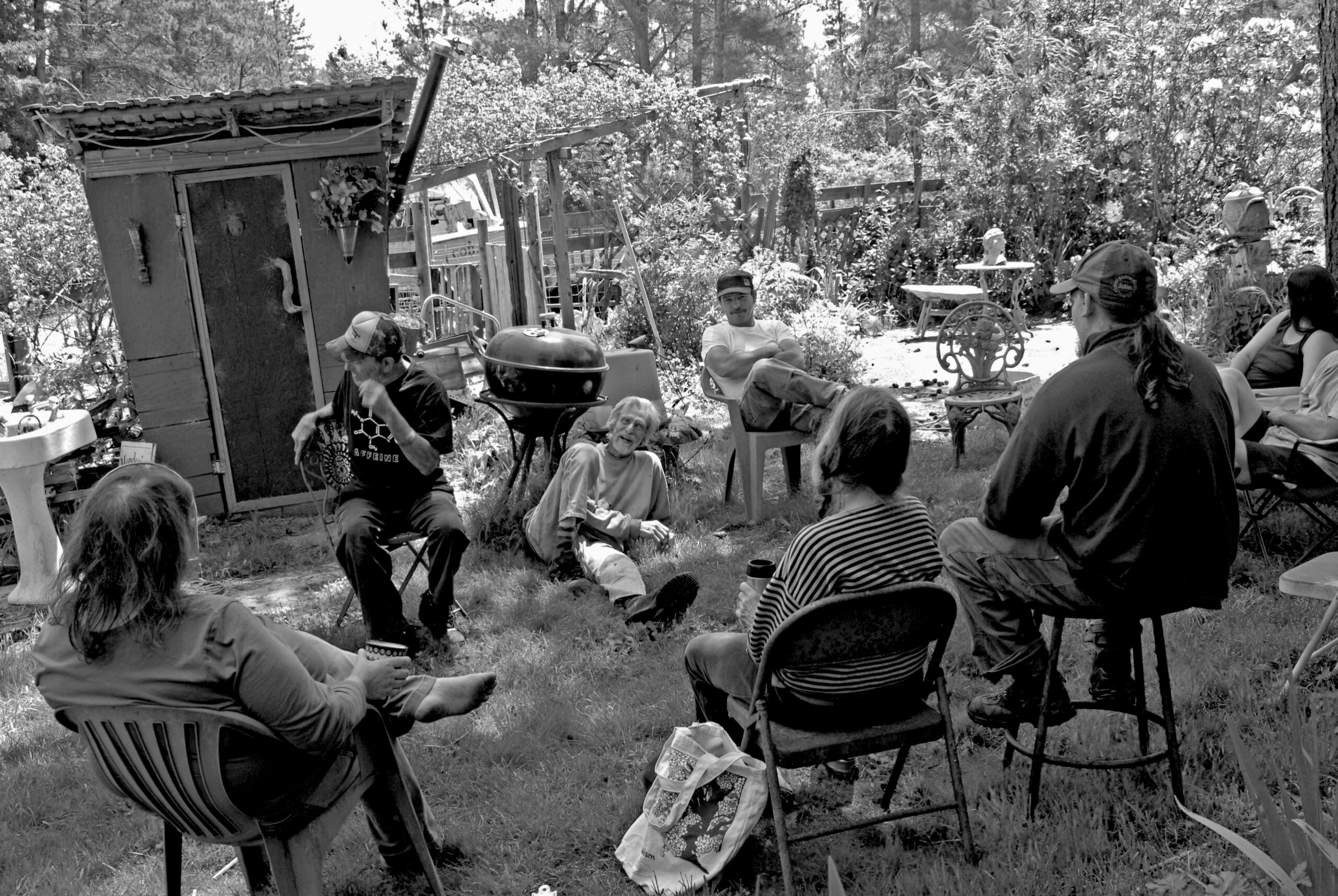
Gabriel Berent, Communal Land Meeting, 2012
Since the beginning of the commune, all land issues have been discussed in meetings — from passing one’s share in the property to fighting for the survival of the utopian ideal. Members share their opinions and frustrations, and then vote on how to move forward. Every member gets one vote. Lately, the meetings have been focused on the challenges of members not cleaning their parts of the land, forcing the other members to sue them to get movement, and on how to transition the land from the first-generation founders to the second generation of members.
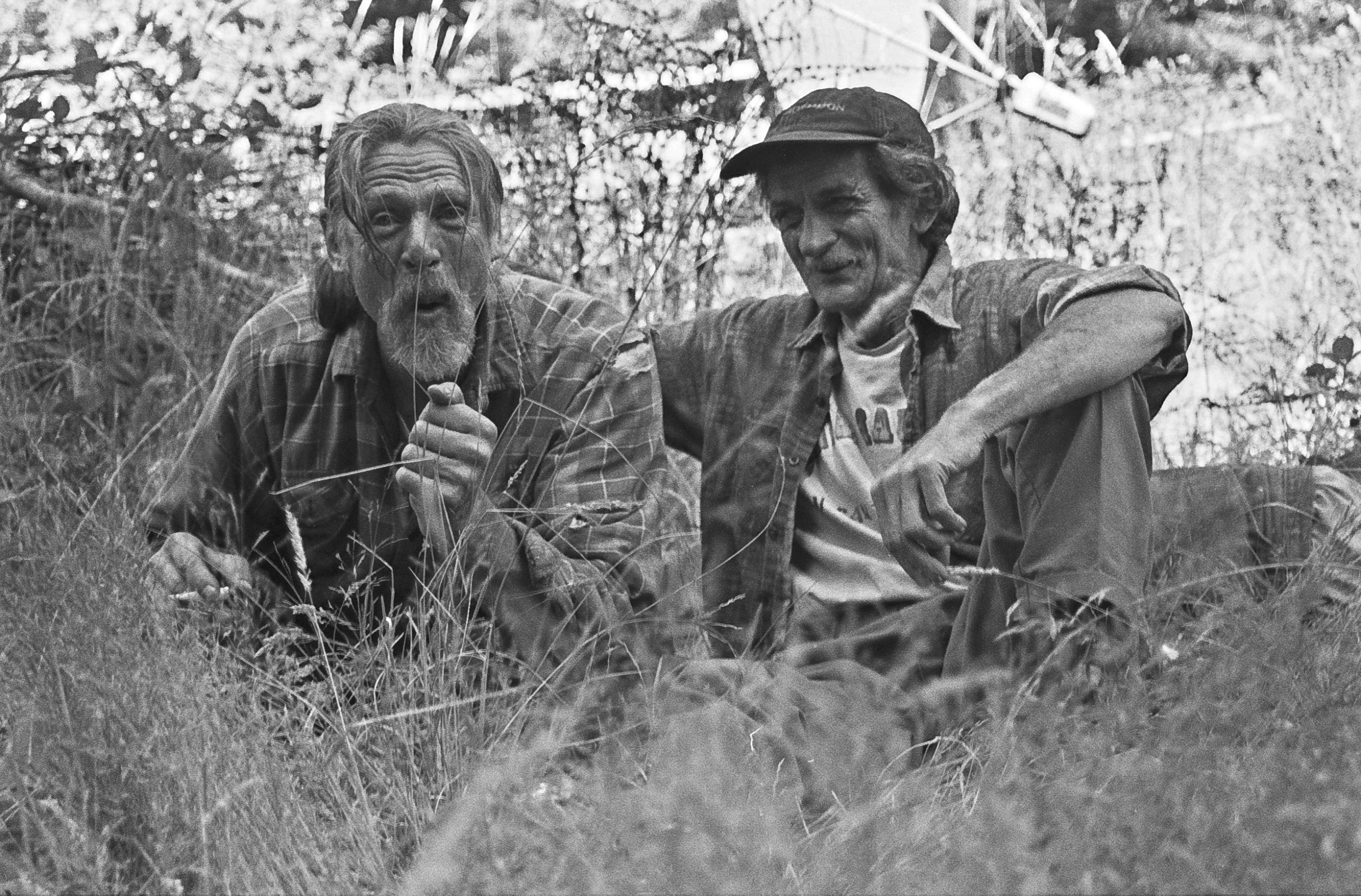
Gabriel Berent, Tommy Rainbow & Ron in the Field, 1998
Ron and Tommy Rainbow sharing a joke at one of the land meetings. As two of the earliest members of the commune, both of them shared a deep bond fueled by time, beer, and memories.
The commune has changed from its founding mission of escaping the materialist constraints of society. Now, elders in this community are aging into their 80s, and the commune has had to confront one element that no one thought of in their 20s—getting older. The current commune struggles with community-generated issues as well. Some members defied the communal spirit by trashing their parts of the land. There is also the existential reality of how to keep this experiment alive in my generation and beyond.
People here have long lived off the land, growing food in the shared garden, harvesting timber, fishing, and hunting, in addition to pursuing creative endeavors. Today, the commune members are dollmakers, woodworkers, artists, photographers, and storytellers. Growing marijuana has also been a key part of the economy, but the market is now disappearing due to legalization, and the growers who relied on growing marijuana to make financial ends meet have had to find other work.
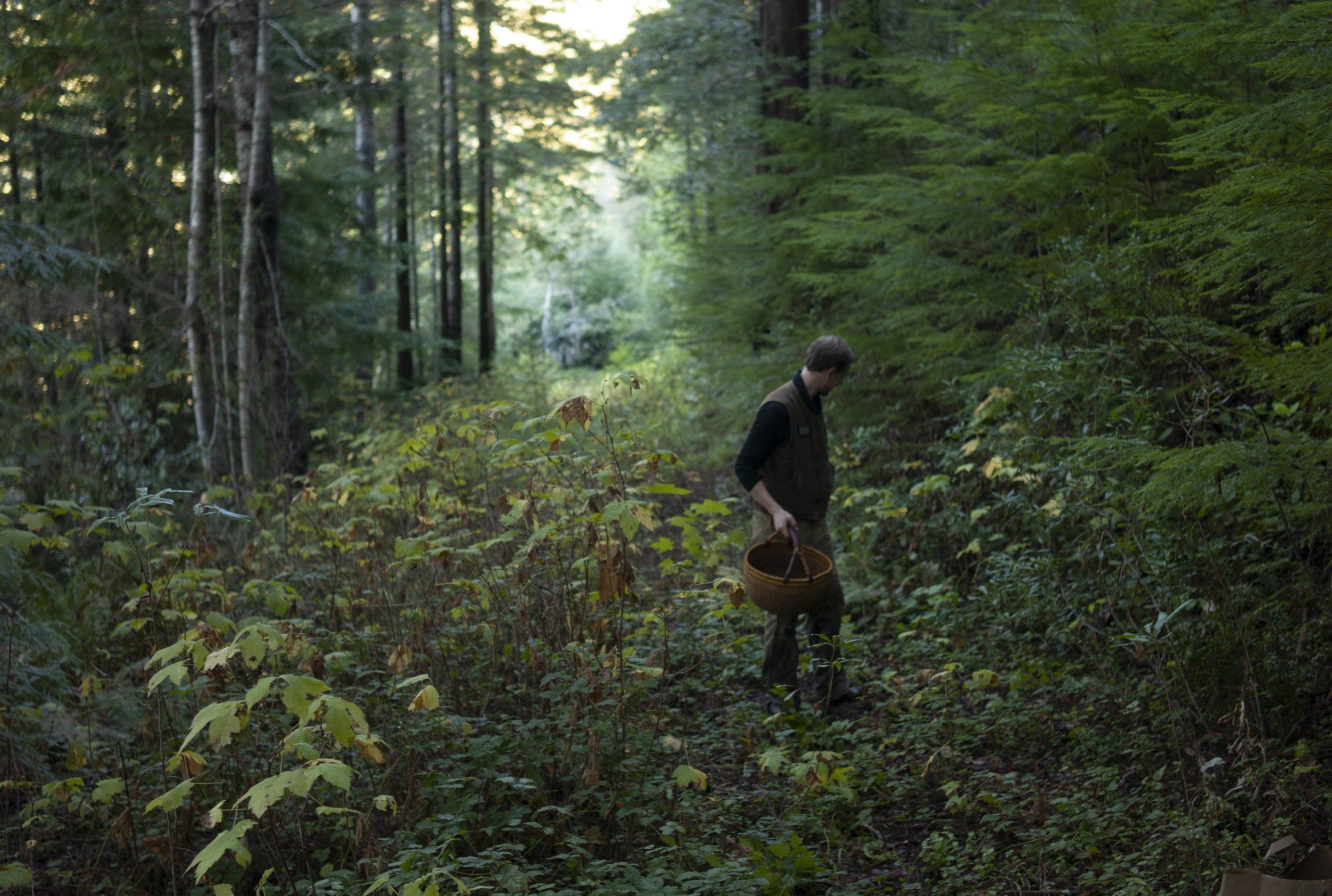
Gabriel Berent, Mushroom Foraging, 2021
Mushroom foraging for chanterelles, boletes, and other magical finds in the old logging roads that surround the forest of the commune.
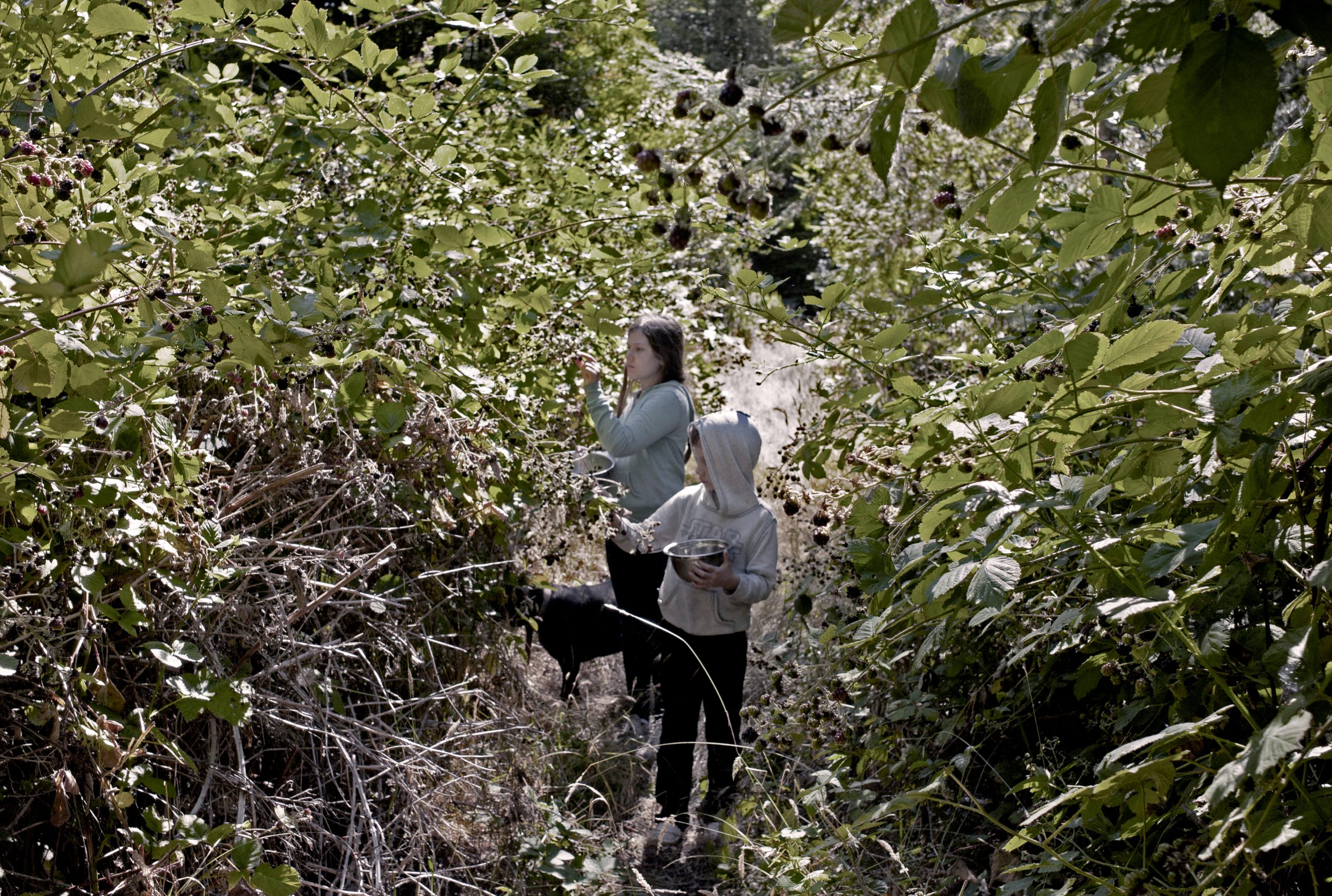
Gabriel Berent, End-of-Summer Blackberry Picking, 2020
Gathering blackberries is an end-of-summer ritual that leads to pies and preserves. There are more blackberries than mouths to eat them. The trick is to make sure to pick them before the other land members decide they want to make blackberry pancakes, which will make your job of harvesting that much more challenging. But most importantly, don’t wear a white shirt to pick in.
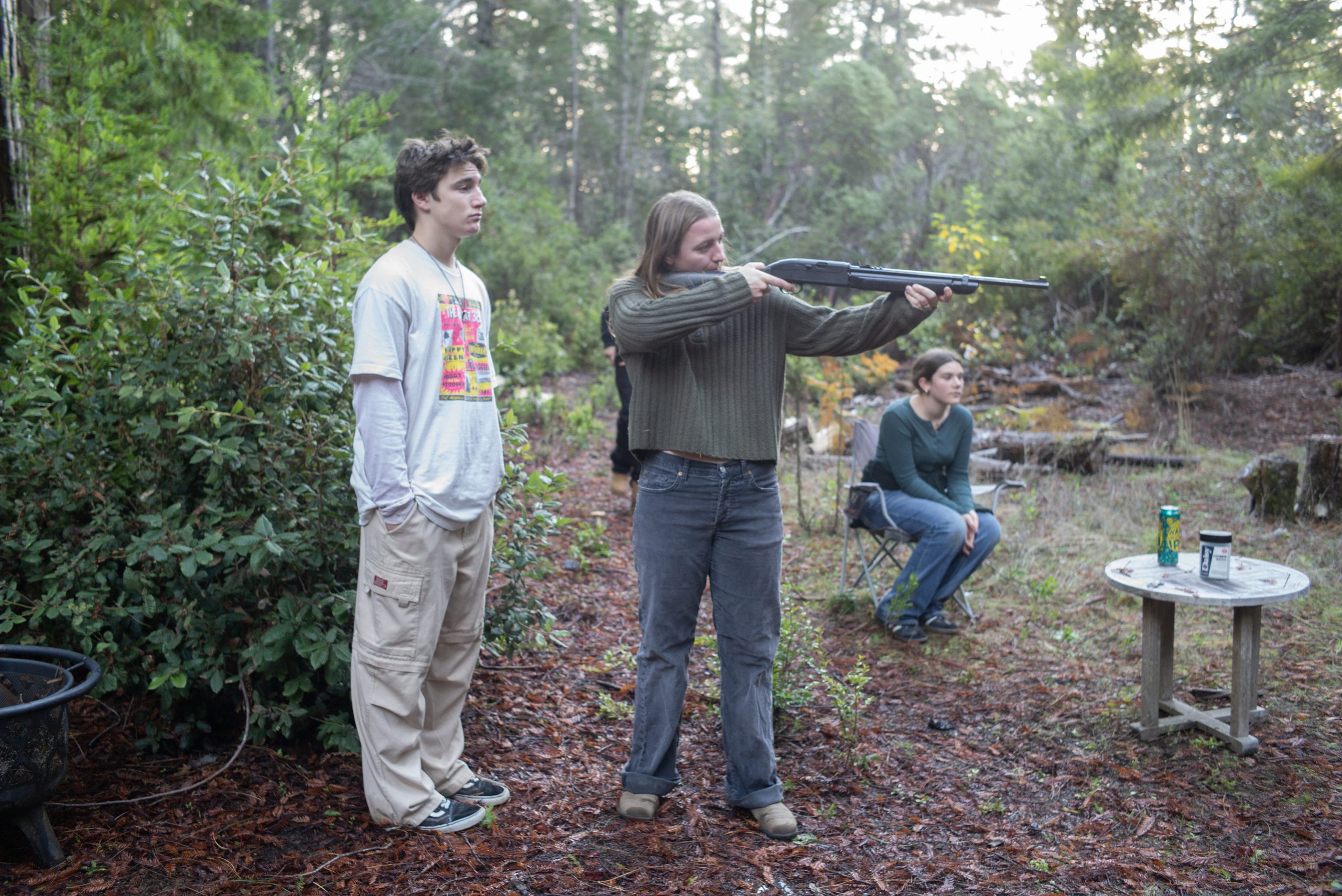
Gabriel Berent, Shooting Practice, 2024
Part of growing up in the country is figuring out what to do without reliable access to cell phone service or the constant distractions of the city. A new BB gun provides a chance for cousins to bond and have target practice with old beer cans. Making sure that you don’t hit one of the older hippies can be a little challenging.
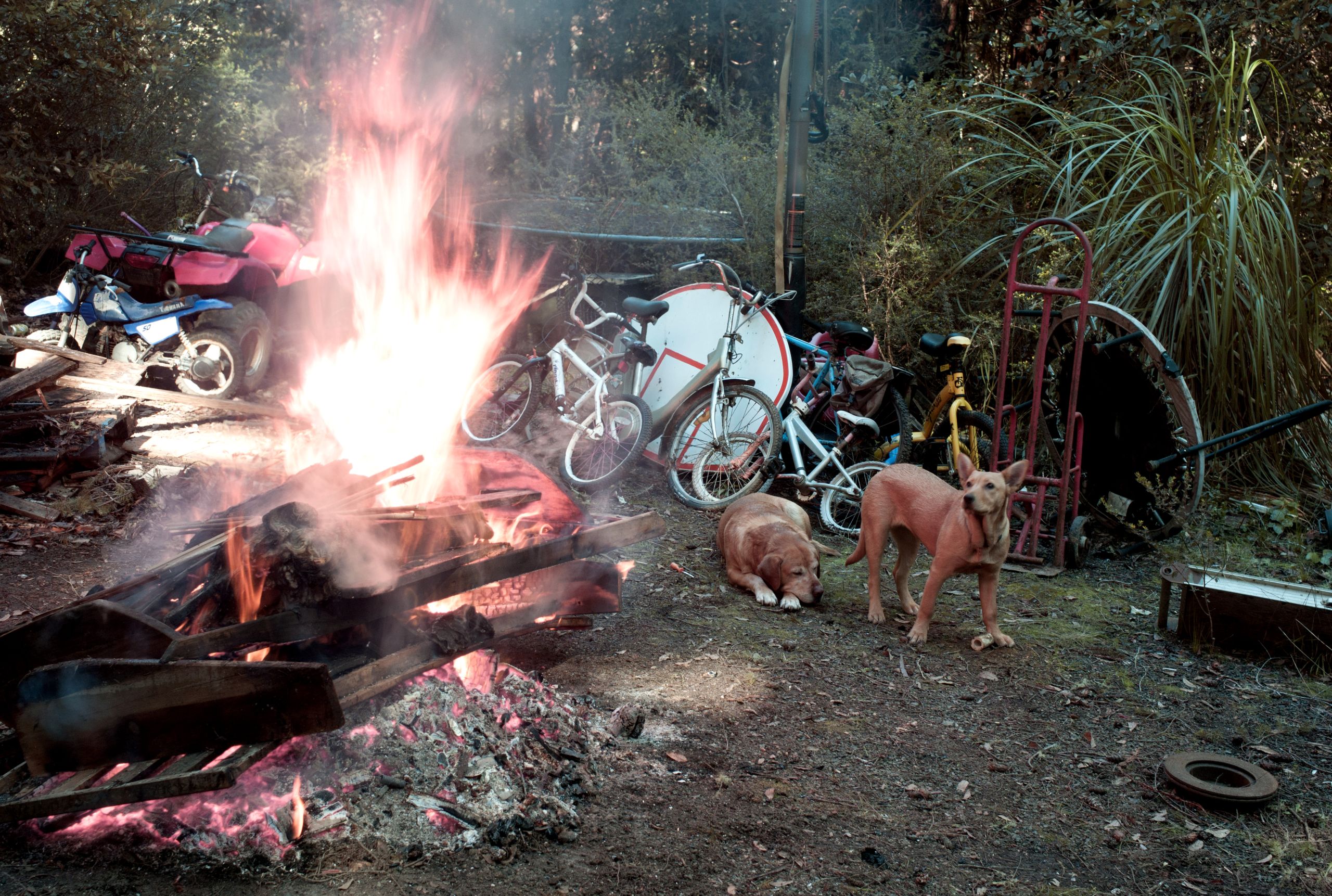
Gabriel Berent, Burning the Trash Spirits, 2019
I rented my cabin to one of the commune members and his family. Being a pack rat and a collector of broken-down cars, old bikes, four-wheelers, and wishful-thinking objects that almost worked, he managed to pile heaps of trash into my yard. After he left, I spent almost five years cleaning up the remnants of his time in my cabin. With help from other community members, we loaded multiple dumpsters and burned the things we could. It became a cathartic experience.
One of the most unique parts of this project is the familial relationship that people on the commune have developed over 50 years together. Physical resources are crucial, but the most essential resource is time and energy — to fix and repair damaged houses, gather firewood, and help older members do work that they physically can’t do anymore. Although I moved away 20 years ago, I am still an insider. My home base for photographing is a cabin that was given to me by my uncle Tommy Rainbow when he died. It is a legacy that I carry forward with the hope of sharing it with my children.
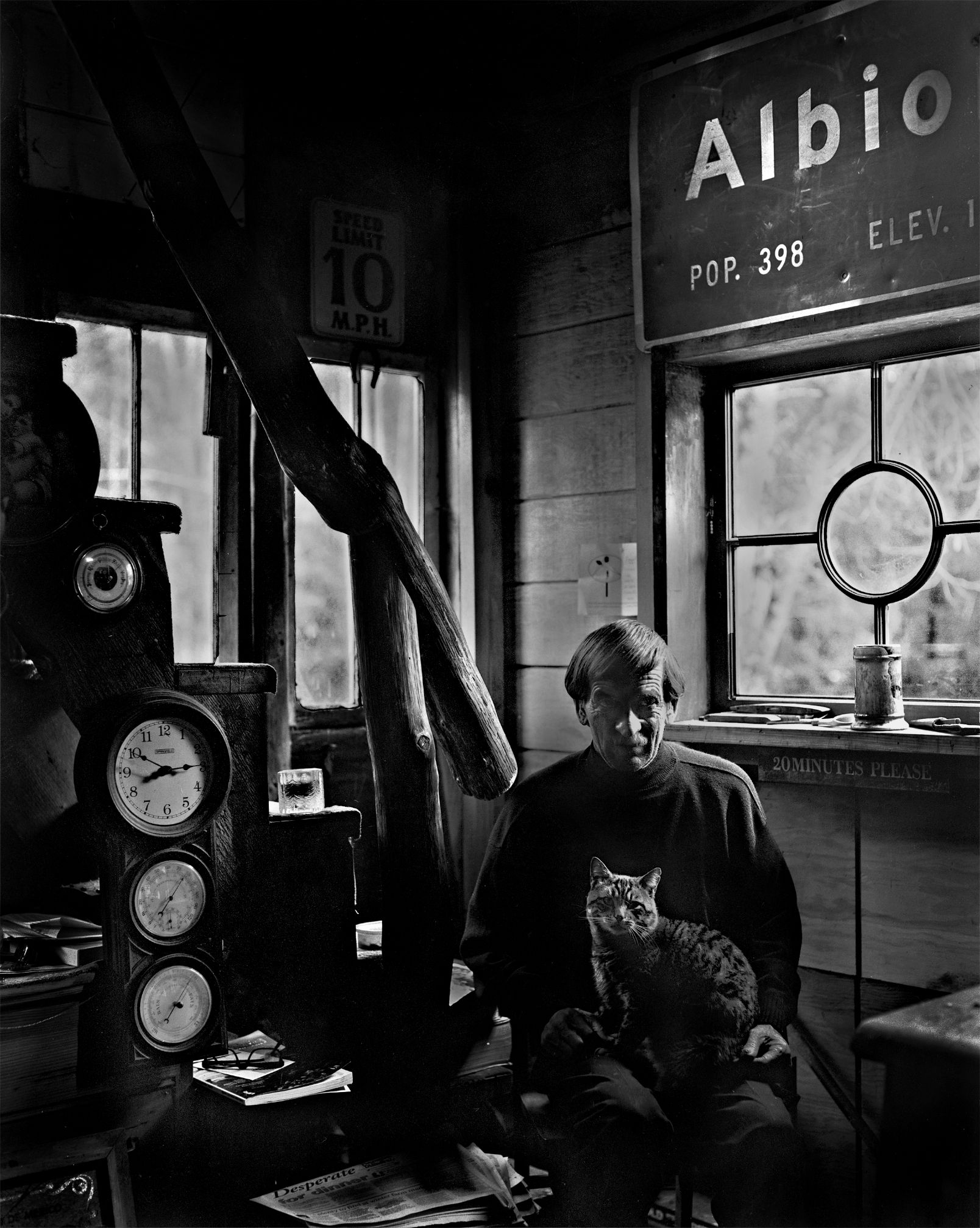
Gabriel Berent, Tommy Rainbow and His Cat Nicodermus, 1997
Rainbow was one of the founding members of the commune. He was a veteran of the Korean War, in which he served as an infantry soldier in the army. During his many different careers, he worked as a chef, an antiques dealer, and most notably, ran Hernia Hauling Co. When I was a kid, Rainbow would have a weekly yard sale to sell bric-a-brac. When he passed, he willed me his cabin with an ominous forewarning: “You are going to have to learn how to be a carpenter.” He neglected to tell me I needed to be a gardener, electrician, and plumber as well.
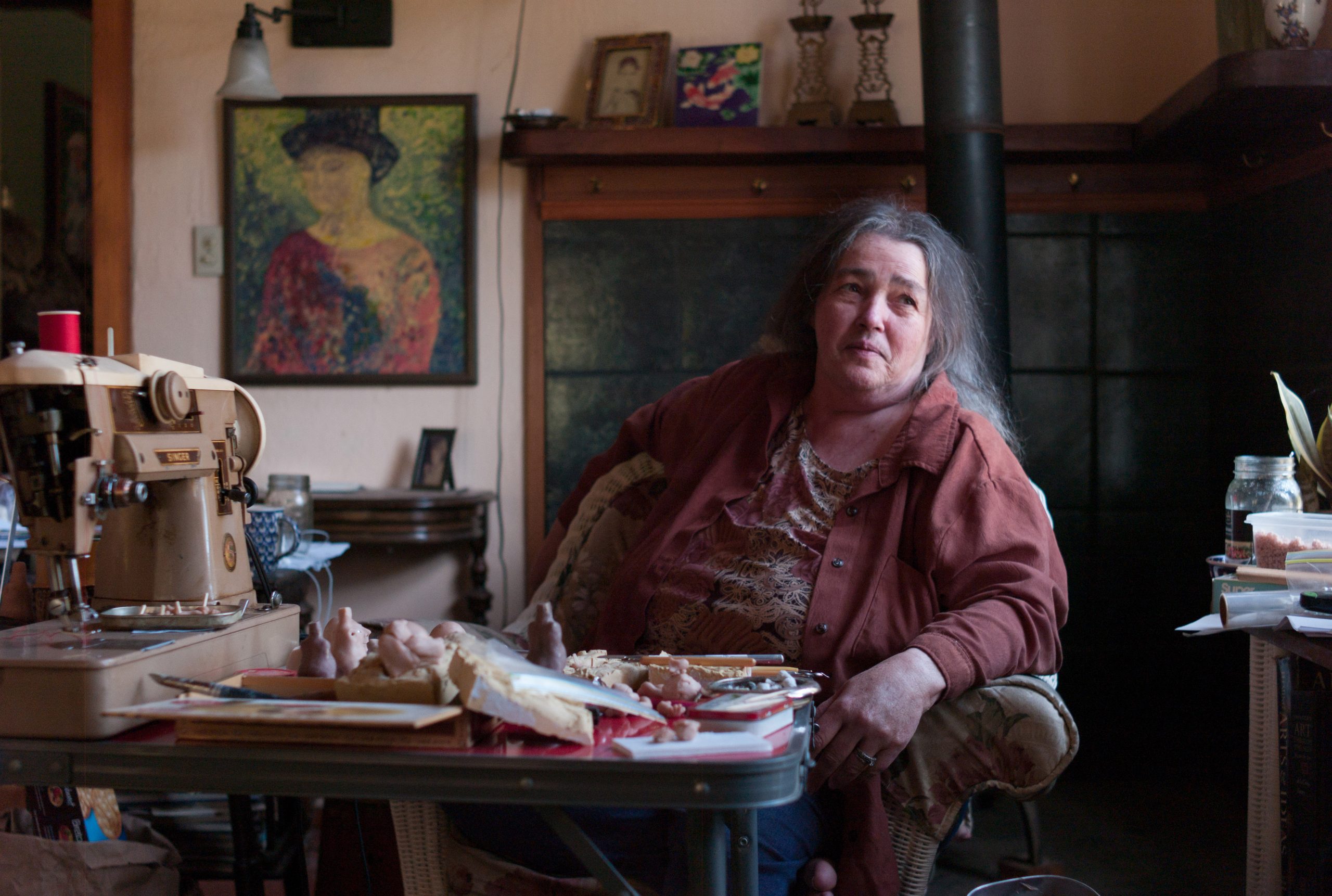
Gabriel Berent, Laura, Master Doll Maker, 2017
Creativity is a trait that runs through all of the founding members. Laura is a master dollmaker who designs and builds “Nubbins” forest creatures and tiny sculptural toys.
At the peak of the communal experience, there were 17 kids who comprised the second generation. Only three out of this generation have inherited voting membership in the commune, and the rest have left to live in other parts of the Pacific Northwest. My sister, Raven, left to go to school and become a teacher. Others died from suicide and overdose. One is a vice principal in the Bay Area. One went to study Irish dance, and the few others who stayed are eking out an existence by being carpenters, painters, and fishermen.
This deeply personal project represents 30 years of photographing both my biological family and my extended communal family.
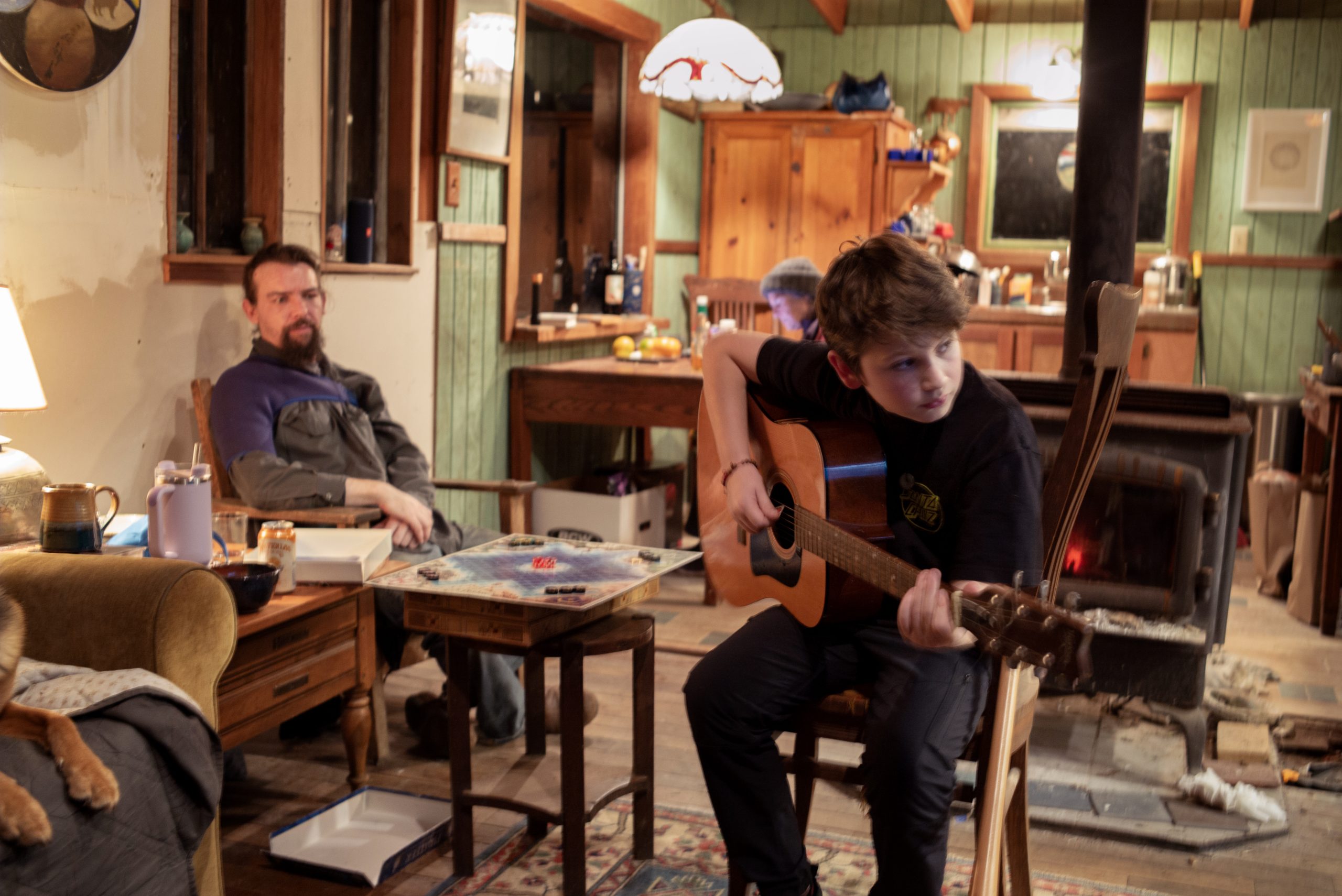
Gabriel Berent, Ezra Practicing Guitar in the Cabin, 2023
In an attempt to bring back the communal spirit of the earlier days of the commune, which hosted large parties, gatherings, and drop-ins, I have begun hosting communal meals at my cabin. Eventually, someone will pick up a guitar and start to play.
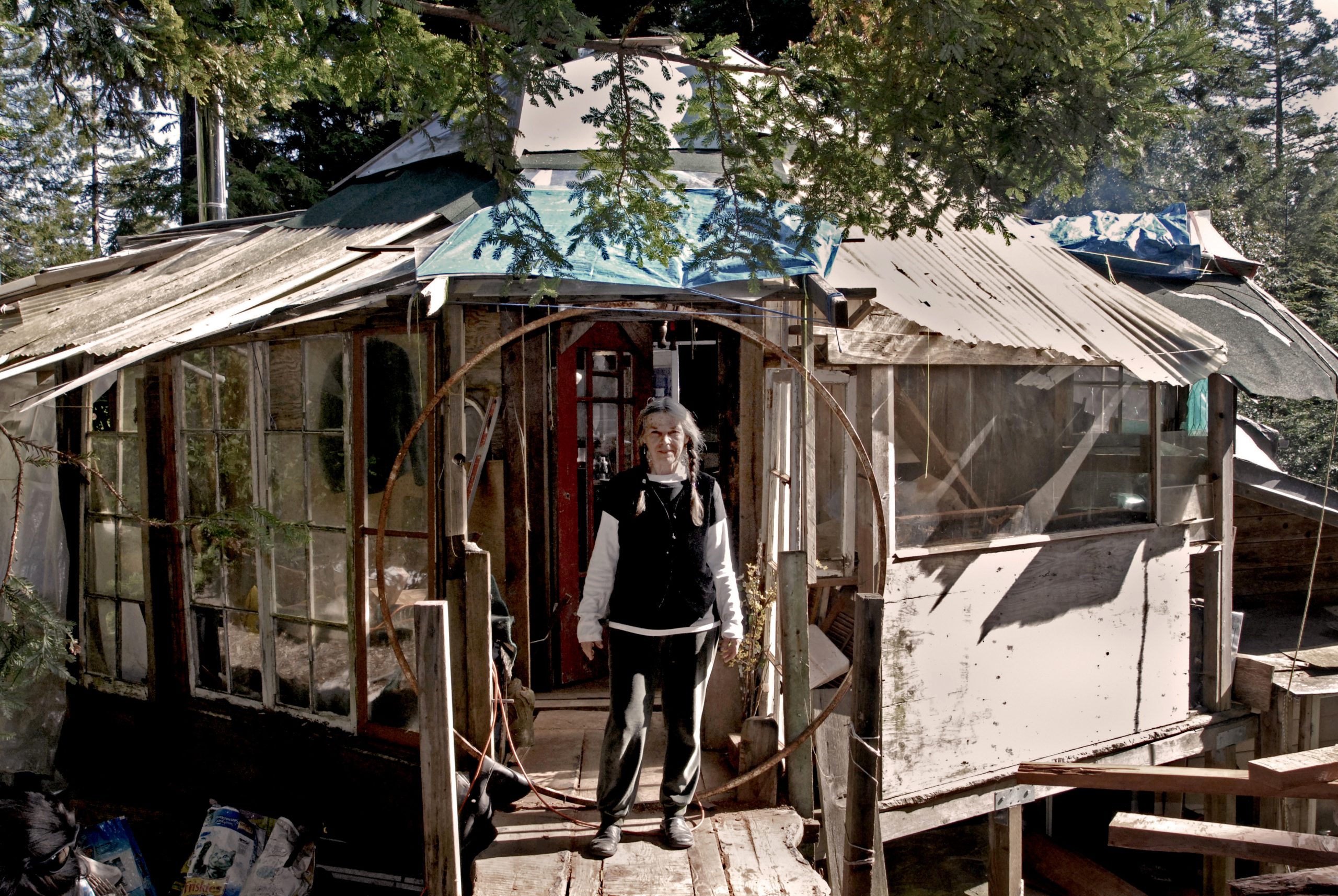
Gabriel Berent, Mom’s Unfinished Hobbit Hole, 2011
My mother in front of the geodesic dome that she is in the process of building. Every year, it leaks because of the challenge of closing a dome and the lack of financial resources to hire carpenters who know how to work on hippie buildings.
Gabriel Berent was raised in a school bus that his dad converted into a home, before living in a home made from salvaged, recycled wood and materials. This early experience of communal living, economic survival, and developing the land informed his concept of poverty, survival, and the crucial role of being creative. Both of his parents nurtured his creative side and encouraged him to study photography.
Gabriel studied under Bill Brazill before studying photography and printmaking at UC Santa Cruz, where he double majored in Community Studies. He received his Master's and teaching credential from Mills College and has been teaching photography and design at Berkeley High School for 20 years.
Documenting parenthood in the military
Arin Yoon
Baseball as a framework for human connection
Jay Goldberg
Intimate portryal of a daughter navigating her mother's Alzheimer's diagnosis
Alicia Vera